

New research presented at the 18th AACR Conference on the Science of Cancer Health Disparities shows that Puerto Rico saw a significant rise in several different types of cancer between 2020 and 2022. Carola T. Sánchez-Díaz, MS, Ph.D., assistant investigator in the Division of Cancer Control and Population Sciences at the University of Puerto Rico Comprehensive Cancer Center, shared the information with the attendees of the conference.
This was not an increase in cancer caused by a chemical spill or a nuclear test.
The specific cancers that showed the increase were associated with obesity: esophageal cancer, upper stomach cancer, colorectal cancer, liver cancer, gallbladder cancer, pancreatic cancer, multiple myeloma, postmenopausal female breast cancer, uterine cancer, ovarian cancer, kidney cancer, meningioma, and thyroid cancer. Other types of cancer remained stable.
Obesity?
36.4% of Puerto Rico’s residents can be diagnosed as obese, compared to 30% of U.S. residents overall. However, nearly half the states in the U.S. have obesity rates higher than 35%. As the map from the CDC shown below makes clear, Puerto Rico is not much different from the other states and territories.
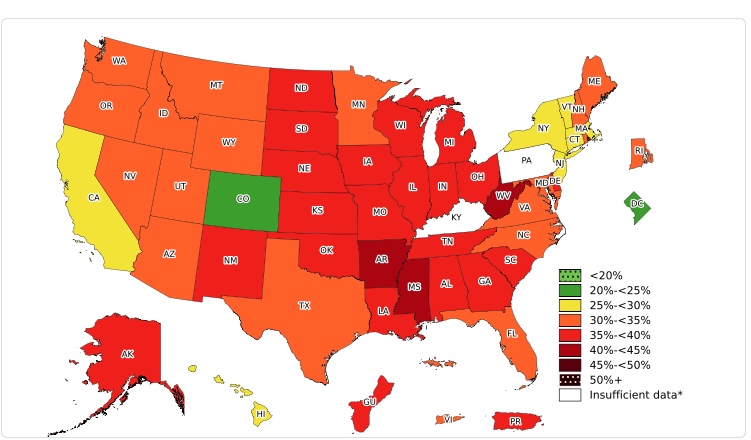
The news is instead the changes in the frequency of obesity-related cancers.
First, did the rate of obesity in Puerto Rico increase in and around that time? The answer is yes. Studies (for example, a study in the Journal of the American Medical Association) found that obesity, along with other chronic conditions and unhealthy behaviors, increased after Hurricane Maria. The cited article suggested that long-term studies should be conducted, and the 2020-2022 study is an example of research following the effects of these changes after the natural disaster.
The article points out that there were already higher levels of some chronic conditions in Puerto Rico than the average for the United States as a whole, but it also documented changes in lifestyle on the Island. There is reason to believe that these changes were not a matter of taste, but were a response to the challenges of living in a territory.
Rough times
Between 2020 and 2022, Puerto Rico dealt with economic crises, earthquakes, continuing damage from Hurricane Maria, the COVID-19 pandemic, and disruptions in basic services such as water and electricity. States were also dealing with some of these problems during these times, but the differences in federal support for territories and for states made the experience in the states different from the experience in the territories.
Checking the map above makes it clear that obesity rates are higher in poorer states, and Puerto Rico has a higher poverty rate than any state. Poverty leads to fewer options for nutritious food, fewer safe spaces for physical activity, less access to health care, and higher levels of stress and anxiety, all of which are known risk factors for obesity. For Puerto Rico, frequent disruptions in basic services like electricity and safe drinking water exacerbate the problems.
Would statehood help?
It is certainly the case that statehood would be better for Puerto Rico economically, just as it has been better for every former territory which has already become a state. but economic improvements are not just about having more money. Economic hardships affect health, education, climate, and other aspects of life. Support for statehood is support for human rights and overall quality of life. Research like that of Sánchez-Díaz just provides specific examples confirming this fact. Reach out to your legislators and make sure that they know that you count on them to support justice and equal rights for Puerto Rico.

No responses yet