

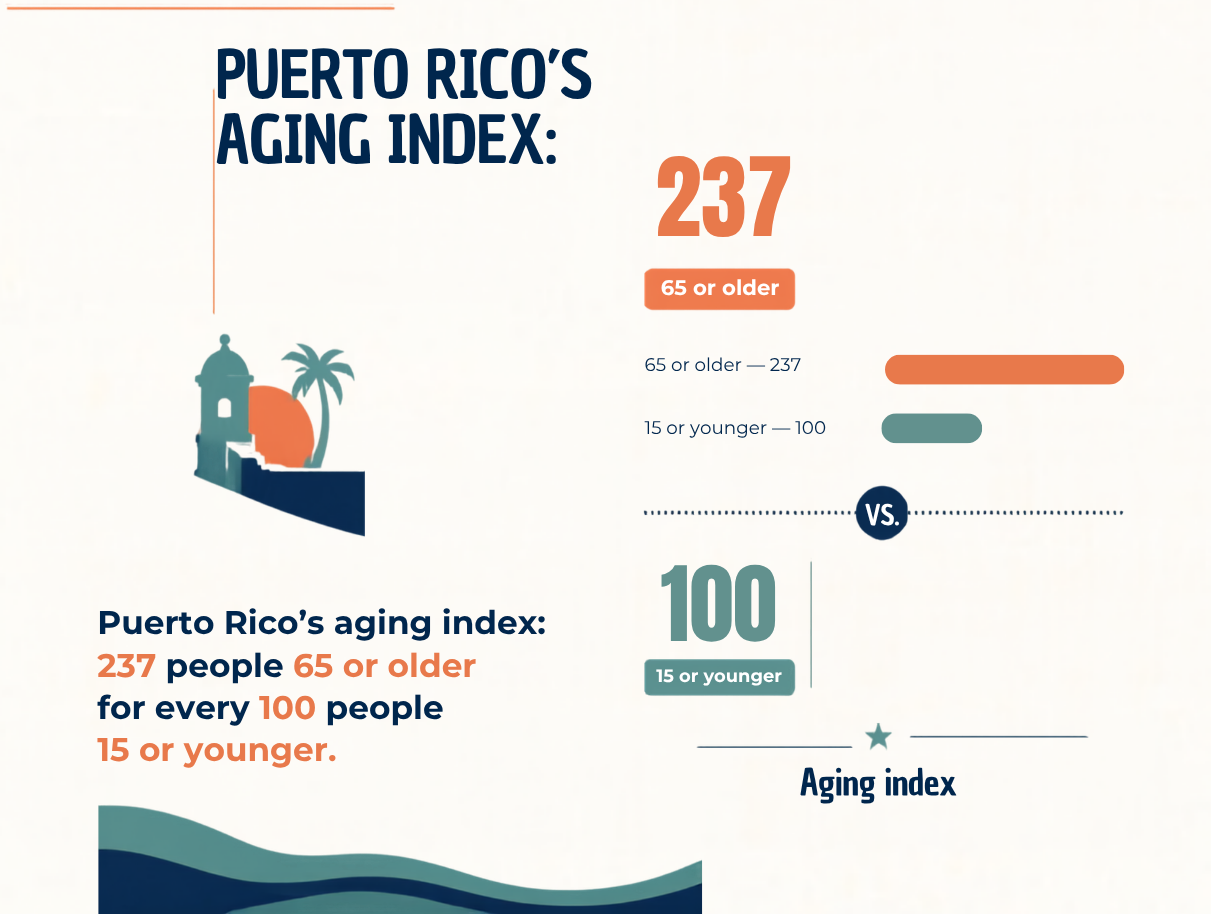
The Aging Index shows the number of people over 65 for every 100 people 15 and under. In the United States as a whole, for example, there are about 85 elderly people for every 100 kids. The U.S. Aging Index is 85. In Puerto Rico, it’s 237. In 2020, it was 168, but in just six years it has grown 1.5 times. There are now more than twice as many seniors as there are children. This is an exceptionally high proportion of elderly people. Caring for them is already a major concern. As the rate increases, elder care in Puerto Rico will become an increasingly serious problem.
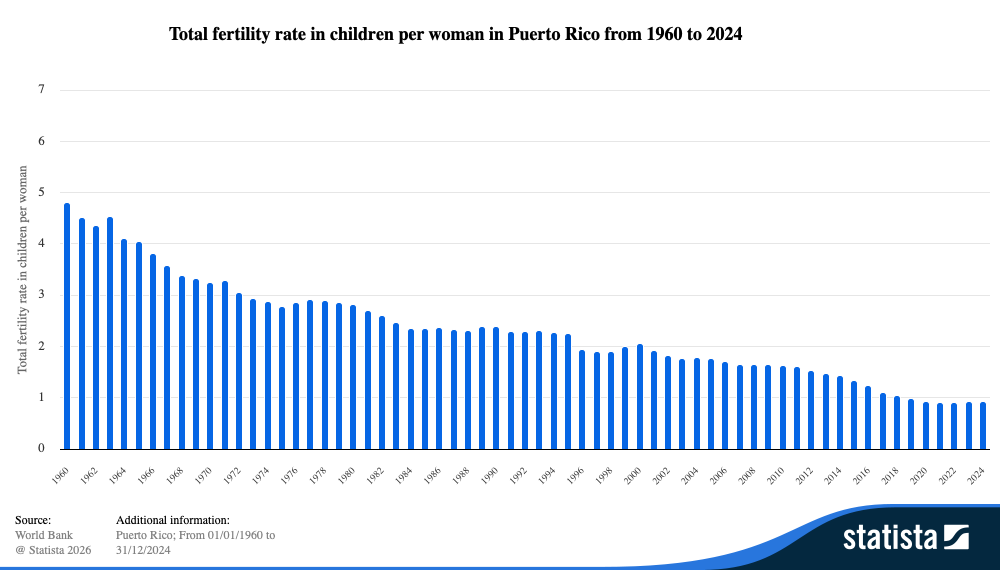
The problem of an aging population is not likely to improve soon. First, Puerto Rico’s birth rate is among the lowest in the Americas — fewer than one baby on average per woman.
Second, younger Puerto Ricans continue to leave the Island. It will be difficult for the remaining young people to care for the increasing number of old people.
Elder care in Puerto Rico
Traditionally, family members take care of the elderly, providing help with mobility and basic daily life as well as financial and healthcare support. According to an AARP survey, 57% of adults over 30 in Puerto Rico are currently caring for elderly relatives, and another 46% expect to do so in the future. The same survey found that 53% of caregivers are financially challenged by this responsibility and 76% experience stress from trying to balance work and family responsibilities.
Nursing homes and skilled nursing facilities are not covered by Medicare in Puerto Rico, apart from 20 days of skilled nursing care following at least three days of hospitalization. Long-term care including assistance with daily activities like bathing or dressing is available in assisted living facilities. However, these may require out-of-pocket payment and are therefore not universally accessible. Medicaid does not generally cover nursing home care in Puerto Rico, though it does in states.
Solutions
Japan, one of the few locations with a higher aging index than Puero Rico, sees their aging population as a crisis and has focused on innovative plans for elder care. One of their ideas is using robots to make up for the shortage of human caregivers. Japan is a dominant power in robotics, though, while Puerto Rico’s robotics adoption is generally limited to pharmaceutical manufacturing hubs. Caregiving robots are not likely to be a solution.
The government of Puerto Rico announced a Ten-Year Healthy Aging Plan earlier this year. Recognizing not only the high Aging Index but also the fact that Puerto Rico shows higher rates of chronic diseases such as arthritis and diabetes, the plan focuses on increasing personal autonomy among the elderly so that they will need less assistance as they age. The territory government is also working with local communities to encourage them to take on more of the responsibility. The government has been investing millions in elder care, but has warned that the costs are unsustainable, and still increasing. The efforts deserve praise, but the resources are insufficient.
Would statehood help?
One of the main reasons for the aging population of Puerto Rico is the fact that younger people are leaving the Island. Many feel pushed out by financial insecurity, a fragile infrastructure, and lack of resources in areas such as healthcare and education. Having left the Island for the benefits of statehood, they might choose to return to a state of Puerto Rico, Certainly, fewer would feel that they have no choice but to leave.
Another is that Medicaid provides far less in Puerto Rico than in the states. With capped funding and low levels of reimbursement, Puerto Rico can’t provide the long-term care that Medicaid covers in states. As a state, Puerto Rico would receive the same benefits as all the other states.
So yes, statehood would help. This is just one more reason to make sure that Congress knows it’s time — long past time — to admit Puerto Rico as a state. Contact your representatives and let them know.

No responses yet