

The United States will have its 250th birthday this year. For most of our history, we added states regularly. The chart below shows how we began with 13 original states, the 13 British colonies that became the United States, and then added more states. They joined briskly in the 18th and 19th centuries, slowed down in the 20th century, and stopped entirely in the 21st.
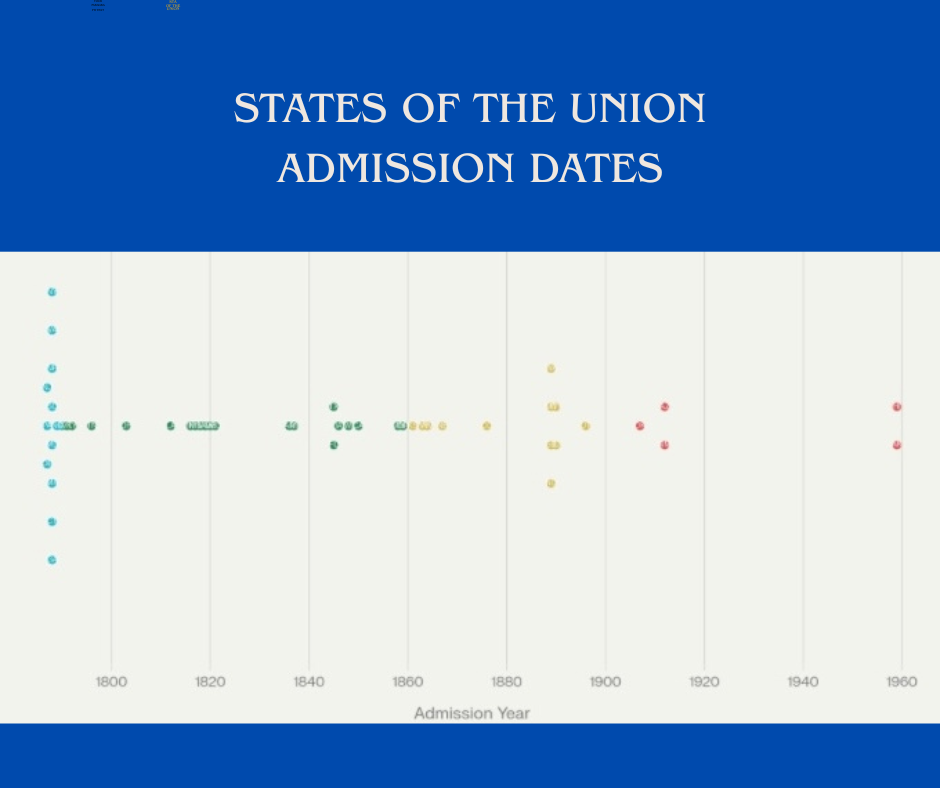
Out of practice
The gap between 1912 and 1959 was long — but not so long that nobody could remember the last time a new state was admitted. There were until quite recently members of the U.S. Congress who had been born in the territory of Alaska or Hawaii before statehood.
Now, however, it has been nearly 70 years since the United States added a state. We’re out of practice. We don’t even seem to remember how it’s done. Rep. Randy Fine has introduced a bill “To authorize the annexation and subsequent admission to statehood of Greenland, and for other purposes.”
Greenland is a self-governing dependency of the Kingdom of Denmark and is part of the Realm of Denmark. Both Denmark and Greenland have clearly stated that they do not want Greenland to be annexed by the United States and are not willing to sell it to the U.S., either. Historically, the United States has acquired land in several different ways, but since 1945, invading a country and seizing it as part of your own nation has been illegal under international law.

Becoming a state
Nearly all the states admitted after the original 13 colonies were territories before they became states. California is one exception; it was under military control after the Mexican-American War and did not become a territory before being admitted as a state. Texas declared itself independent of Mexico and requested U.S. statehood, so it was also never a territory.
Normally a possession of the United States is organized as a territory and then admitted as a state. Puerto Rico is already a territory, and has been for more than a century. Having met all the normal requirements for statehood, including the democratically expressed will of the people (not a requirement, but customary), Puerto Rico can be admitted by Congress at any time with a simple majority vote.
Exercising our statehood muscle
The current administration is clearly excited about expanding the United States. But before trying to force statehood on Greenland (or Canada, for that matter), Congress should go ahead and admit Puerto Rico. Puerto Rico is already a territory of the United States. Puerto Rico’s voters have said four times that they want to be a state. The majority of Americans have said in polls since the 1960s that they want to have Puerto Rico as the 51st state. Puerto Rico’s Constitution has already been approved by Congress and we are fully integrated into the national life of the United States already. There is no reason to delay.
Once Puerto Rico has been admitted, the United States, fully warmed up, could go on to consider other potential states.
No responses yet