

By Howard Hills
In the late 1990’s, radicalized Puerto Rico communist extremists demanding separate nationhood made renunciation of U.S. citizenship a political stunt that backfired legally and politically in favor of statehood.
Renunciation of Citizenship
In the early 1990’s, an American pro-Castro ideologue in Puerto Rico, communist Mari Bras, went to the U.S. embassy in Caracas and, in accordance with State Department regulations, renounced his U.S. nationality and citizenship. Bras took an oath of “de-naturalization,” and later received a Certificate of Loss of Nationality. A copy-cat renunciation followed by an anti-American cohort of Mari Bras named Lozada Colon. Both returned to Puerto Rico and were admitted by federal immigration authorities, each denouncing America and flaunting oath of renunciation documents to the press.
These two anti-democratic radicals were allowed to enter without U.S. passports, because local INS agents didn’t know how to handle the disposition of their status. The INS agents at the airport were aware the renunciants were well-known to be U.S. citizens when they left, and allowed them to enter instead of detaining them for adjudication of status, which could and arguably should have included returning them to Caracas as stateless persons. The U.S. does not admit stateless persons, but this was a press stunt that bamboozled the INS and dominated print and broadcast media in Puerto Rico for more than a year.
Those anti-American Puerto Ricans declared themselves nationals and citizens of the “sovereign nation” of Puerto Rico. Yet, from 1952 to 2024, in several votes related to Puerto Rico’s political status, the democratic majority in Puerto Rico repeatedly have affirmed the Preamble of the Territorial Constitution, which cites as “determining factors in our life our citizenship of the United States…” and “our loyalty to the principles of the Federal Constitution.”
Getting personal
In 1997, I was in private practice of law focused on constitutional law in Washington, working at that time with Dick Thornburgh, former U.S. Attorney General, former Under Secretary of the United Nations, and two-time Republican Governor of Pennsylvania. We were co-counsel on projects related to both Marshall Islands nuclear testing claims issues and Puerto Rico political status issues.
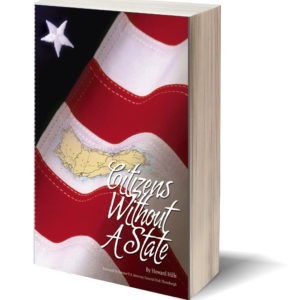
Thornburgh was a great legal scholar who contributed to highly sophisticated Supreme Court briefs when he was Attorney General. He also worked with me to edit a book on completion of the flawed 1953 U.N. decolonization process for Puerto Rico, with a foreword by former President George H.W. Bush, later published in 2007 by the Center for Strategic and International Studies (CSIS). Thornburgh also wrote a foreword for my own 2021 book on Puerto Rico statehood movement, Citizens Without A State.
In the Mari Bras and Lozada Colon cases, Thornburgh and I jointly developed and shared arguments with the U.S. State Department that the U.S. should rescind the Mari Bras and Lozada Colon Certificates of Loss of Nationality. That argument was based on the reasoning that the oath of renunciation includes agreement that all rights of U.S. nationality and citizenship are voluntarily relinquished.
In that context, the oath of renunciation by Bras and Lozada Colon was fraudulent, given the intent of the putative renunciants to return to PR as non-citizens without a visa. That evidenced intent to continue to enjoy the benefits of U.S. nationality and citizenship, making the renunciants subject to return to Venezuela and/or prosecution in the U.S. for false-oath perjury.
Thornburgh knew Congressman George Gekas from Pennsylvania where Thornbirgh had been Governor. We worked with Congressman Gekas to develop a comprehensive legal analysis of U.S. nationality and citizenship in Puerto Rico. That included a study on the application of the citizenship renunciation law to Americans in the U.S. territories.
Gekas and his staff reviewed our study of these nationality law issues, and both before and after the U.S. acted to revoke the renunciation status of Bras and Lozada Colon. The Congressman decided to publish two in depth statements on these matters in the Congressional Record, explaining the applicable law and supporting both diplomatic and judicial action that resulted in nullification of the fraudulently obtained certificates of renunciation.
Failure of the stunt
As the political stunt by Bras became known and Thornburgh’s statements on the topic drew attention in Congress, House and Senate committee staff joined Thornburgh and Gekas in advising State Department Consular Affairs Bureau about the issue. A key official at the State Department was an attorney who I had worked with in 1982-1986 on the visa waiver for citizens of Micronesia, Marshall Islands and Palau under the Compact of Free Association.
The State Department lawyers concurred with and embraced the Thornburgh-Gekas analysis, and, again, with the support of a growing chorus from Congress and Puerto Rico, the U.S. Department of Justice did so as well. The result was that the U.S. State Department sent letters of rescission that consistent with the arguments Thornburgh and Gekas had made, as well as other territorial law experts. The letters of revisions informed those misguided Americans enjoying the freedom we have due to rule of law that they had made fraudulent declarations and their certificates were null and void.
Confirming ideological obstinance that would put them in prison in Cuba, Lozada Colon sued in federal court in DC! The DOJ briefs consistent with the Thornburgh-Gekas analysis were definitive, the federal judge discerned the renunciation hoax, and the court slam dunked the claim of a right to live in the U.S. as an expatriate national without a visa.
Those who still support separate nationhood seek converts to that cause by upholding the Pacific Islands free association pacts. What all Americans in Puerto Rico need to understand is that the Pacific free association compacts require citizens of those associated state nations to reside in the U.S. as foreign nationals and non-immigrants. That requires a visa waiver status that is subject to deportation for conviction of crimes, dependence on public welfare and other grounds applicable to all aliens in the United States.
Howard Hills served as Senior Counsel in Territorial Status Affairs in the Executive Office of the President, State Department and Interior Department in the Carter, Reagan, Bush (41), Trump and Biden administrations.
One response
Wow, that was an interesting read! I hadn’t realized how much past political theater — like the citizenship renunciations in the 1990s — has shaped the conversation around Puerto Rico’s future. The article makes the case that dramatic stunts ended up pushing most voters away from the idea of full independence and instead toward maintaining strong ties with the U.S., partly because people value the stability and legal protections that come with U.S. citizenship. It’s pretty clear from the piece that these moments aren’t just trivia; they’ve influenced how Puerto Ricans think about identity, security, and practical governance. At the same time, the discussion reminds me that Puerto Rico’s status debates are layered and emotional, with deep historical and legal threads. Whether you’re rooting for statehood, independence, or something else, it’s worth understanding how past choices and personalities have helped shape today’s majority view against separate nationhood