

2016 was an eventful year. A decade after PROMESA and Supreme Court decisions doing away with the idea that Puerto Rico has a unique special relationship with the United States, it’s also the 10th anniversary of Britain’s separation from the European Union. It was popularly called Brexit, to stand for Britain’s exit from the EU.
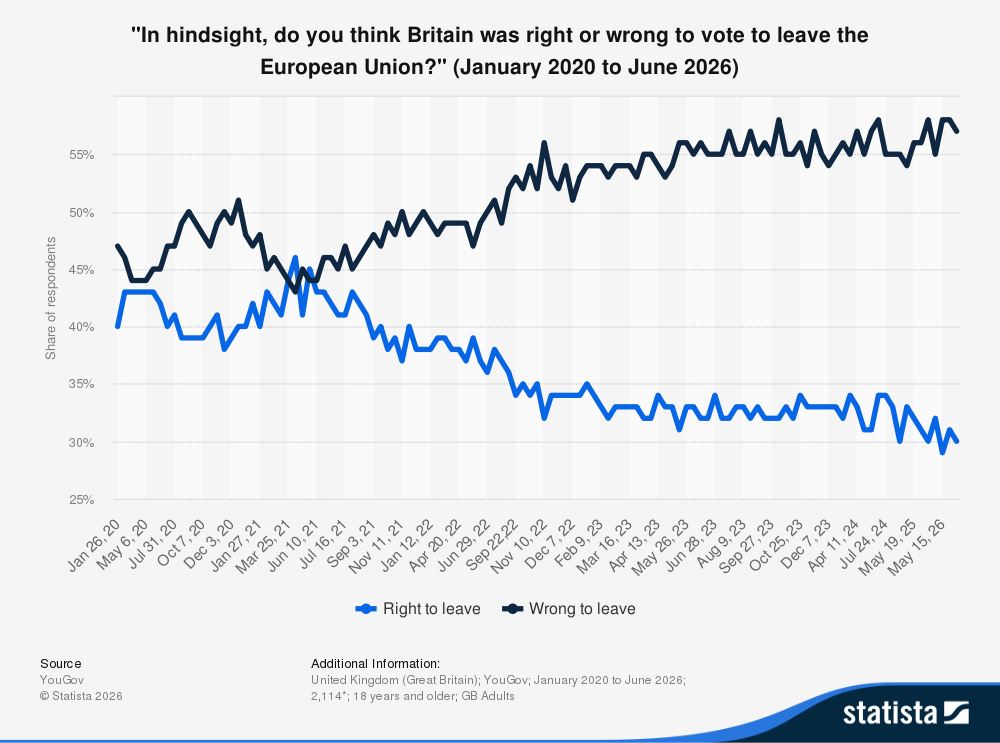
As the 10th anniversary looms, 60% of Britons say Brexit has been a failure. 89% of those who voted against leaving say that Brexit was a mistake. Only 12% of Britons say it was a success. The Economist says Brexit made the economy worse and it made life harder. They quote a worker in England saying, “Brexit was fixing a problem we didn’t have.” He continues,“We are stuck now.”
What was the problem with Brexit?
Observers now point out that Brexit was always a fantasy. Just as with Prexit, as some have called separation of Puerto Rico from the United States, the supporters of Brexit imagined a rosy future in which they negotiated a wonderful deal with the EU. They thought they could keep the perks and privileges of membership in the European Union without having the responsibilities, such as acceptance of free transit for other EU members and following EU regulations. Instead, they ended up with none of the benefits but still have most of the EU regulations on the books and have replaced EU migrants with far more non-EU immigrants.
Supporters of Brexit never had a real plan, just as supporters of Prexit do not. As the book Prexit says, speaking of high-level negotiations “between the U.S. Department of State and the Puerto Rican Decolonization Delegation,” “During these very important negotiations, issues such as citizenship, social security, and veterans’ benefits, federal block grant assistance, maritime jurisdictions, security and defense, free transit, the establishment of U.S.-Puerto Rico diplomatic relations, among other issues would be worked out.” Other plans in the book include a tax on the Puerto Rican diaspora, a government funded primarily by tariffs and taxation of multinational companies, and mandatory national service. Just as with Brexit, all of these ideas are impossible without the cooperation of others. Brexit didn’t get that cooperation.
Brexit fans, like supporters of Puerto Rican independence who think they’ll get U.S. citizenship and reparations or “commonwealth” supporters who expect features of statehood and nationhood, all rights and no responsibilities, the Brexit supporters had high hopes for negotiated goodies. Hoping is not a strategy, though. The European Union had no good reason to give the Brits all they wanted on their way out. They didn’t give them much at all.
Nearly half of Britons would like to return to the European Union, but they can’t. Puerto Rico, too, would be stuck with separation if it rejected statehood or territory status. Puerto Rico has already rejected territory status and movement toward decolonization is the accepted path. This means that those supporting sovereignty through separation, rather than the sovereignty of statehood, should be prepared to find themselves stuck with a fantasy.
No responses yet