

Puerto Rico’s tourism industry has grown noticeably in recent years, and its pharmaceutical and medical device manufacturing have continued to be an important pillar of the economy. Over the past decade, the Island has made efforts to diversify, with mixed results. Some loudly heralded efforts have failed to emerge, while others may show promise, but one area of innovation is beginning to stand out. In recent years, Puerto Rico has worked to build an emerging tech economy alongside its established tourism and life sciences sectors, and we are seeing progress.
Biotechnology
In the past, and especially under Section 936, large pharmaceutical companies farmed out finishing tasks to Puerto Rico subsidiaries, but relied on transfer payments and tax savings to do the heavy lifting in their Puerto Rico divisions. That has changed. Puerto Rico is increasingly the site of new drugs, biosimilars, and other leading-edge technologies.
Not only does Puerto Rico have FDA- approved facilities and a workforce experienced in the special needs of medical production, the Island also has strong research capabilities and an exceptional pool of experts in biomedical technology. The Island has, in fact, the United States’s highest concentration of experts in this field.
The Puerto Rico Science, Technology, and Research Trust is actively working to establish Puerto Rico as a globally recognized hub for biotech, and offers exciting opportunities for students, research scientists, and entrepreneurs alike. A strong focus on education in life sciences in Puerto Rico’s institutes of higher education makes this goal entirely realistic.
Information technology
Puerto Rico has 80+ colleges and universities, and 60% of current graduates hold STEM degrees. Across the U.S. in general, the average is just 20%. At the same time, Act 60, while controversial, has been able to bring in funding for software development, software as a service, and artificial intelligence startups. The people of Puerto Rico have always been one of the Island’s most important natural resources, and the same is true today. The heavy concentration of skilled and qualified workers makes Puerto Rico an attractive place for IT startups.
At the same time, remote work is the norm in this field, and that provides opportunities in the industry for Puerto Rico residents. Where medical professionals may feel that they have to leave the Island for professional opportunities, developers and other information professionals can remain in Puerto Rico and work with the major players in the field.
Government support
The federal government designated San Juan as a Tech Hub in 2023, supporting biotechnology projects in particular with grant funding and technical support. Governor Gonzalez-Colon has invested in the Puerto Rico Science, Technology, and Research Trust with the same goal in mind. “Puerto Rico is competing today in an economy where true value comes from the ability to generate knowledge, innovate, and transform ideas into real opportunities,” she said, describing the investment as “a strategic decision that corrects a historical gap and positions Puerto Rico to participate in the knowledge economy that is being built globally.”
The U.S. Senate’s Committee on Finance reported in 2016 that Puerto Rico faced challenges in reaching its potential in STEM industries in spite of its clear advantages. They discussed the inequities in pay, in federally-funded training opportunities, and in data collection. Yet they also made specific suggestions for future improvement. “Puerto Rico is in a very unique place to develop a strong Health IT sub-segment within the IT industry. It is our view that several factors can improve employment and income opportunities in Puerto Rico that would promote a robust Health IT industry that could be regional and global in nature. Our industry’s expertise in federal guidelines and our domain of the Spanish language provides a strong basis for our IT companies and entrepreneurs to provide products and services serving not only to the English speaking world in developed countries but also to Spanish speaking countries,” the report stated. “It is our view that an integral part of promoting the Health IT industry is to achieve parity in Medicare and Medicaid and all health programs, ensuring that all federally funded and Congressionally mandated Health IT programs apply to Puerto Rico in a similar fashion to other states.”
Other states?
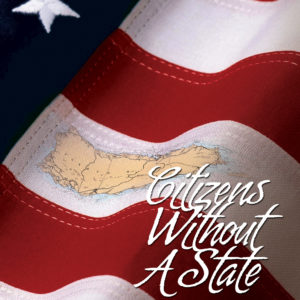
The Senate report talked about “other states” as though Puerto Rico was already a state, something we often see in Congressional documents. Unfortunately, Puerto Rico is not a state. This is why the Island does not have parity in Medicare, Medicaid, or indeed in federal funding in general. While Congress has the power to bring funding in Puerto Rico up to the same level as the states, the Constitution allows Congress to treat Puerto Rico differently. Naturally, with no voting members in Congress, Puerto Rico is an easy place to cut funding when Congress is fighting to reduce the budget.
As a state, Puerto Rico will be guaranteed equality with the states. At that point, we will have the level playing field we need to fulfill our promise as a tech hub. Contact your legislators and make sure they know that Puerto Rico should be a state.

No responses yet